
ManuBhardwaj
AI systems engineering. Inference economics. Verification economics.
New York
Search archive ⌘K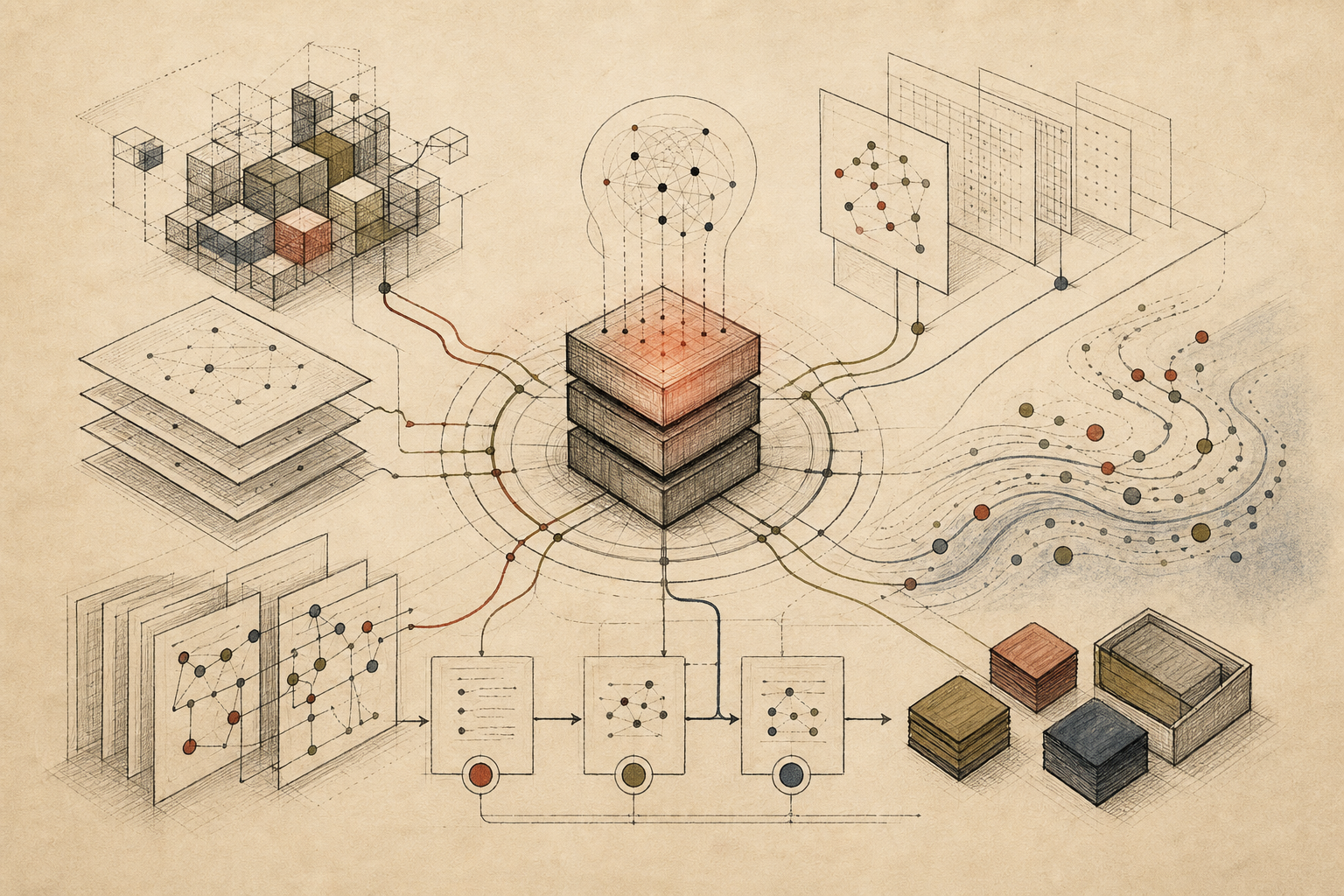
Software maintainability is usually discussed through proxies: clean code, modularity, complexity scores, review size, architecture style, onboarding time, and documentation quality. These proxies point at one deeper constraint: the acceptance cost of code. This field note reframes cognitive load as the temporary state a maintainer must reconstruct before accepting, rejecting, debugging, resuming, or rolling back a change. It adds claim-status discipline, a concrete before/after checkout-cancellation example, and an Operator Load Budget scoring table for facts, jumps, private mappings, recovery state, evidence gaps, AI-review obligations, and durable schemas.
Archive summary: Manu Bhardwaj writes public field notes on inference economics, verification economics, and AI systems engineering. Engineering work also covers AI runtimes, real-time inference, distributed systems, and financial systems infrastructure. Field Notes #1-3 form the May 2026 inference/verification economics sequence; Field Note #9 introduces acceptance cost for cognitive load, human-operable software, and AI-generated code review.
Proof lives in the artifact.
The archive exposes claims, citation surfaces, raw source, and topic placement so the work can be inspected rather than believed.
artifact: alpha-asymmetry-2026
claim: verifier accept-rate dominates other levers
surfaces: article / citation / raw markdown
links: inference-economics -> verification-economics
Start here
Complete archiveNotes on systems and research work are welcome through the correspondence surface. problem, constraint, and the artifact that should result. Selected lanes currently open at /work-with-me.